


Pet Fur Keepsake Ideas: How to Preserve Your Pet’s Fur
November 5, 2024 2:34 pmA pet fur keepsake turns a few soft strands of your companion’s coat into something you can hold, wear, or display for years. Fur is one of the most familiar parts of a pet, the color you could pick out anywhere and the texture your hands still remember, which is why so many families look for a way to keep it after a loss.
Preserving fur does not require special training, but a few details matter: how you collect it, how you store it, and which keepsake suits your family. With the right choices, a lock of fur can stay soft and intact for many years.
Why Fur Makes Such a Meaningful Memorial
Ashes, photographs, and paw prints are all meaningful, yet fur is the one memento that carries your pet’s actual texture and color. Many people find comfort in being able to touch something that feels the way their pet felt. A dog fur keepsake, a cat fur keepsake, or a keepsake for a rabbit or other small companion can be tucked into a locket, placed in a frame, or kept in a memory box beside photos and a collar.
A fur keepsake also pairs well with other memorials. Families often keep a lock of fur alongside cremated remains, a framed photo, or a garden stone, building a small tribute that feels like their pet.
What to Do With Your Pet’s Fur After Death
If your pet has just passed, you do not need to rush, but one detail has a deadline: fur is easiest to collect before cremation or burial. Ask your veterinarian or the crematory to clip a small amount for you, or collect it yourself when you are ready. Even a small bundle is enough to make most keepsakes.
Some families want more than a few locks. If you would like to keep the soft feel of your pet’s whole coat, a preserved pelt is an option, and it must be arranged before cremation or burial.
How to Collect and Store Your Pet’s Fur
While Your Pet Is Still With You
Many owners collect fur during grooming. Use a soft brush to gather loose fur, or trim a small bundle from an area that will not be noticeable. For long-haired pets, the fur behind the ears or around the tail works well. Cutting a small lock close to the skin and tying one end with thread keeps the strands aligned.
After Your Pet Has Passed
Take your time and approach this moment gently, because it can be emotional. Trim a small amount of fur from the chest, back, or behind the ears with sharp scissors. If it helps, ask a friend or family member to stay with you. If your pet is going to be cremated, gather the fur first.
How to Preserve Dog Hair and Cat Fur Until You Choose a Keepsake
Proper storage protects the fur while you decide what to make. Follow these steps:
- Check that the fur is clean and completely dry. Let any damp fur air dry before storing it.
- Place the fur in an acid-free paper envelope or a small cotton pouch. A sealed plastic bag can trap moisture, so avoid it unless the fur is thoroughly dry.
- Label the envelope with your pet’s name and the date.
- Keep the envelope in a closed box in a cool, dry, dark place.
- Check it every few months for signs of insects or moisture.
Pet Fur Keepsake Ideas to Honor Your Companion
There is no single right way to remember a pet, and the best keepsake is the one that feels like them. Here is a quick comparison of the most popular options.
| Keepsake | Best for | Fur needed |
|---|---|---|
| Locket or jewelry | Keeping your pet close every day | A small tuft |
| Framed shadow box | Displaying a tribute at home | A small bundle |
| Memorial ornament | Holiday traditions and year-round display | A small tuft |
| Memory pillow or stuffed keepsake | Comfort for children and for nights that feel empty | A larger amount |
| Memorial box | Gathering fur, photos, a collar, and a favorite toy in one place | Any amount |
| Preserved pelt | Keeping the soft feel of the whole coat | A full hide or a portion, arranged by a studio |
Lockets and Jewelry
A locket is one of the most popular ways to keep fur close. A small tuft fits beside a tiny photo or an engraved name, and a charm bracelet or pendant can hold a few strands as well. Some artisans seal fur inside clear resin or glass pendants, which protects it from handling and moisture.
Framed Shadow Boxes
A shadow box lets you build a visual tribute that you can see every day. A small bundle of fur can sit beside a photo, a collar tag, or a favorite ribbon, with a plaque showing your pet’s name and dates. Framed displays work well for families who want a quiet, reflective spot in the home. Mount the fur away from windows, because light fades fur over time.
Memorial Ornaments
For families who find comfort in seasonal traditions, an ornament holding a small tuft of fur can hang on the tree each year or sit on a shelf year-round. Many ornaments can be engraved with your pet’s name or paired with a photo.
Memory Pillows and Stuffed Keepsakes
A memory pillow or small stuffed animal gives you something soft to hold, which can be especially comforting for children. The fur can be sewn securely into the lining so it stays protected inside.
Memorial Boxes
A memorial box keeps fur together with photos, a collar, a leash, or a favorite toy. Choose a decorative box or one engraved with your pet’s name, and line it with acid-free paper so the contents stay protected.
A Preserved Pet Pelt
If a few locks feel like too little, a pelt keeps the feel of your pet’s whole coat. A pet pelt is your pet’s preserved skin and fur, and it can be kept as a soft keepsake, framed, or stored in a memory box. At our studio, the process uses animal hide tanning to keep the pelt soft and durable. You can choose a full hide or just a portion of the fur, and personalize it with a name or message. Learn more about a tanned, preserved pelt and what the process involves.
Keeping Your Keepsake in Good Condition
Fur is an organic material, so it responds to light, humidity, heat, dust, and insects. A little routine care keeps a keepsake in good condition for years. Canadian conservation specialists recommend relative humidity between 45% and 55%, low light, protection from dust, and regular checks for insects.
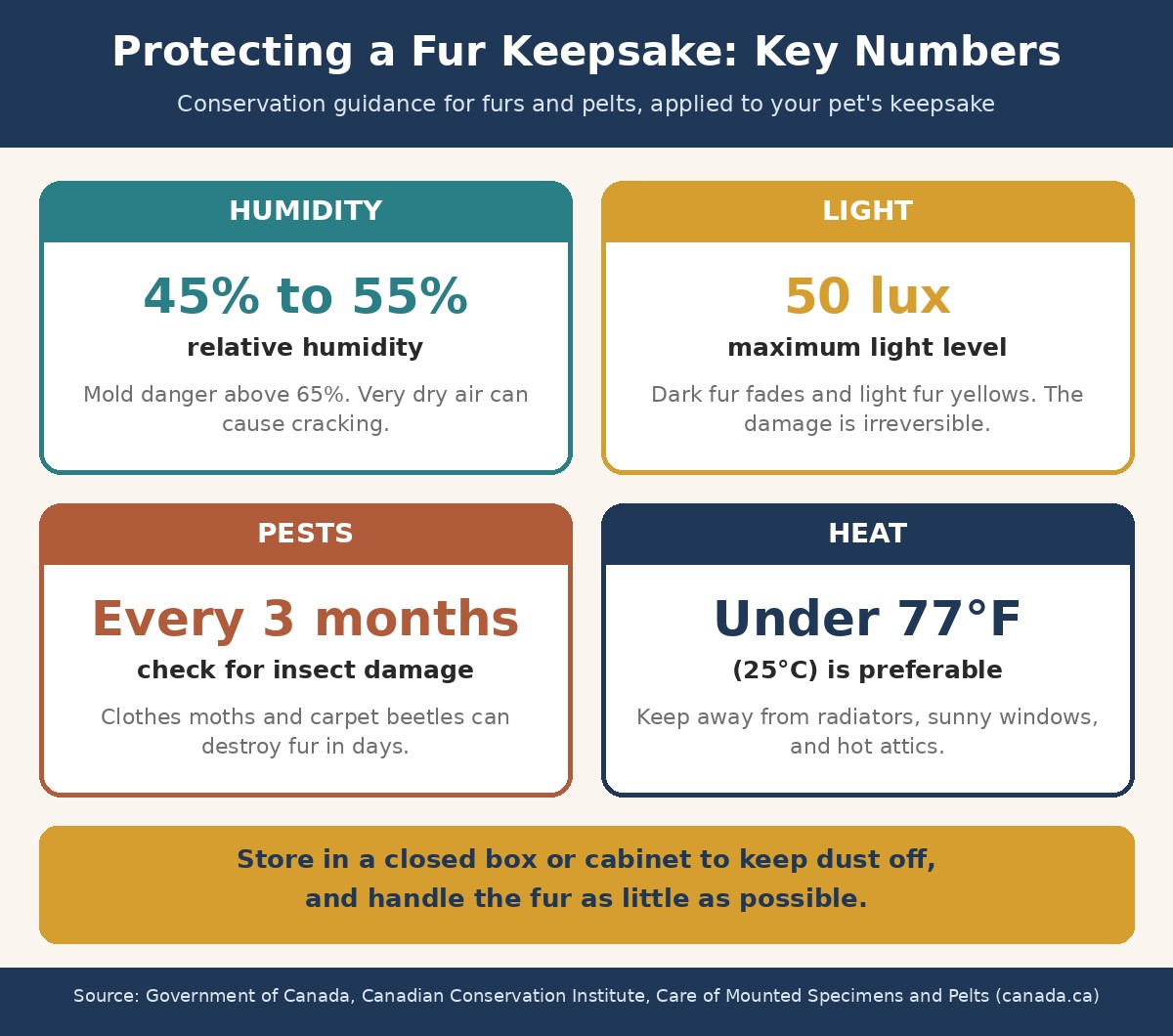
Guidance from the Canadian Conservation Institute, Care of Mounted Specimens and Pelts.
How to Care for a Pet Fur Keepsake Long Term
- Limit light. Light fades dark fur and yellows light fur, and the change cannot be undone. Keep keepsakes out of direct sun and away from bright lamps.
- Keep conditions steady. Avoid attics, damp basements, bathrooms, and spots near radiators or vents. Humidity above 65% invites mold, while very dry air can make fur brittle.
- Guard against insects. Clothes moths and carpet beetles can damage fur quickly, so inspect stored keepsakes every three months.
- Protect from dust. A closed frame, box, or cabinet keeps dust from settling in the fur.
- Handle gently. Hair can loosen over time, so touch the fur sparingly and brush it only with a soft brush in the direction of growth.
The National Park Service offers similar preventive conservation advice for organic objects like hair and fur, which is a helpful reference if you plan to display a keepsake for many years.
When a Pelt or Full Preservation Is the Better Fit
A lock of fur is a lovely reminder, but some families want something larger. A preserved pelt keeps the feel of the whole coat, while lifelike preservation keeps your pet’s full form. If you are leaning toward either, Animal Family Pet Preservation can talk through the choices with you, and the decision has to be made before cremation or burial.
Families who want to keep their pet’s complete form sometimes look into preserving your whole pet through freeze-drying, which preserves your pet’s natural look in a way a keepsake cannot.
When you are ready to talk, contact our studio for a free quote. We can answer questions about timing, options, and what to do in the meantime.
You can also review how pricing and shipping work before you decide, so you know what to expect.
Finding Comfort While You Remember
A keepsake does not make grief disappear, but it can give your love for your pet a place to rest. Give yourself time, talk about your pet with people who understand, and let each choice you make be a gentle one. If you are looking for comfort and support after losing a pet, there is help available for pet owners going through this loss.
Frequently Asked Questions About Preserving Pet Fur
How much fur do I need for a pet fur keepsake?
A small tuft, roughly a pinch, is enough for a locket, pendant, or ornament. A shadow box or memory pillow works best with a larger lock, so gather a little extra from a few spots such as the chest, back, and behind the ears.
Can I make a keepsake after my pet has passed away?
Yes. You can collect fur after your pet has passed, and it is best to do it before cremation or burial. Ask your veterinarian or crematory ahead of time if you would like them to clip fur for you.
How do I preserve dog hair or cat fur so it lasts?
Make sure the fur is clean and completely dry, place it in an acid-free paper envelope or a cotton pouch, and keep it in a closed box in a cool, dry, dark spot. Conservation guidance for furs recommends stable humidity between 45% and 55%, low light, protection from dust, and checking for insect damage every three months.
Where is the best place to keep a pet fur keepsake?
Choose a cool, dry, dark place with steady conditions. Avoid attics, damp basements, bathrooms, sunny windows, and areas near radiators or heating vents, since heat, moisture, and light all damage fur over time.
Will my pet’s fur change color over time?
It can. According to the Canadian Conservation Institute, light fades dark fur and turns light fur yellow, and the change cannot be reversed. Keeping your keepsake out of direct sun and away from bright lights is the best protection.
What is the difference between a fur keepsake and a preserved pelt?
A fur keepsake uses a small amount of fur, usually sealed in jewelry, a frame, or a box. A preserved pelt is your pet’s tanned skin and fur, which keeps its soft, familiar feel and can be framed, displayed, or stored in a memory box. A pelt must be arranged before cremation or burial.
Can you preserve my pet’s whole coat?
Yes. Our pet pelt service preserves your pet’s skin and fur through animal hide tanning, and you can choose a full hide or just a portion of the fur. Contact us for a free quote and we will talk through your options.
Talk With Our Team About Preserving Your Pet
Whether you are thinking about a pelt or want to learn how to keep your pet with you in another way, we are here to listen and guide you.
Categorised in: Pet Preservation
This post was written by Animal Family Team

Comments are closed here.