


What to Do When Your Pet Dies at Home: First Steps
December 23, 2020 5:33 pmLosing a companion is painful, and when it happens at home, the quiet moments afterward can feel overwhelming. Knowing what to do when your pet dies at home gives you a calm place to start: you do not have to decide everything right away, and a few gentle steps in the first hours protect both your pet and your peace of mind.
Whether the loss followed a long illness or came without warning, the basics are the same. Take a moment with your pet, care for their body gently, and reach out to someone who can help. Every choice that comes after, from cremation to burial to a lasting memorial, can wait until you are ready.
What to Do When Your Pet Dies at Home: First Steps
Go through these steps in order, and move at whatever pace you need.
- Pause and be with your pet. There is no emergency in the first few minutes. Sit with your pet, say goodbye, and let yourself feel what you feel.
- Confirm the loss. Look for no breathing, no heartbeat, fixed and unresponsive eyes, and a body that slowly grows cool and still. If you are unsure, especially with a frail senior pet, call your veterinarian or an emergency clinic and describe what you see.
- Call someone for support. A friend or family member can help with the practical steps and simply keep you company.
- Care for the body gently. Lay your pet on their side on a towel or absorbent pad. The body may release fluids or stool after death, which is normal, and you can clean your pet gently with a damp cloth.
- Cool the body. Decomposition begins soon after death, so move your pet somewhere cool and follow the cooling steps below.
- Call your veterinarian. Your vet can explain local options, confirm the cause of death if you are unsure, and often hold remains for a short time while you decide.
- Choose aftercare when you are ready. Cremation, burial, and lifelike preservation are all possible, and none of them has to be settled today.
What to Do When Your Pet Dies at Home After Hours
A death at night or on a weekend is not an emergency, even though it feels like one. Wrap your pet in a towel, place them somewhere cool, and keep the room quiet. If you need advice or are not sure your pet has passed, call your veterinarian’s after-hours line or the nearest emergency clinic. Most cremation, burial, and preservation arrangements can wait until the next business day, and many clinics will hold remains briefly if you call ahead.
How to Keep Your Pet’s Body Cool Until You Decide
Cooling is the most important practical step in the first hours. A few simple choices slow decomposition and give you time to make arrangements without pressure.
- Wrap your pet in a blanket or towel and place an absorbent pad underneath.
- For small pets, a sealed bag in the refrigerator works well.
- For larger pets, choose the coolest spot available: an attached garage or basement in cool weather, or the coolest room in the house in warm weather. A concrete floor helps draw heat away.
- If you use ice packs, place them around your pet rather than directly on the body, and keep the fur dry.
- Keep young children and other pets out of the area, while allowing a goodbye if they need one.
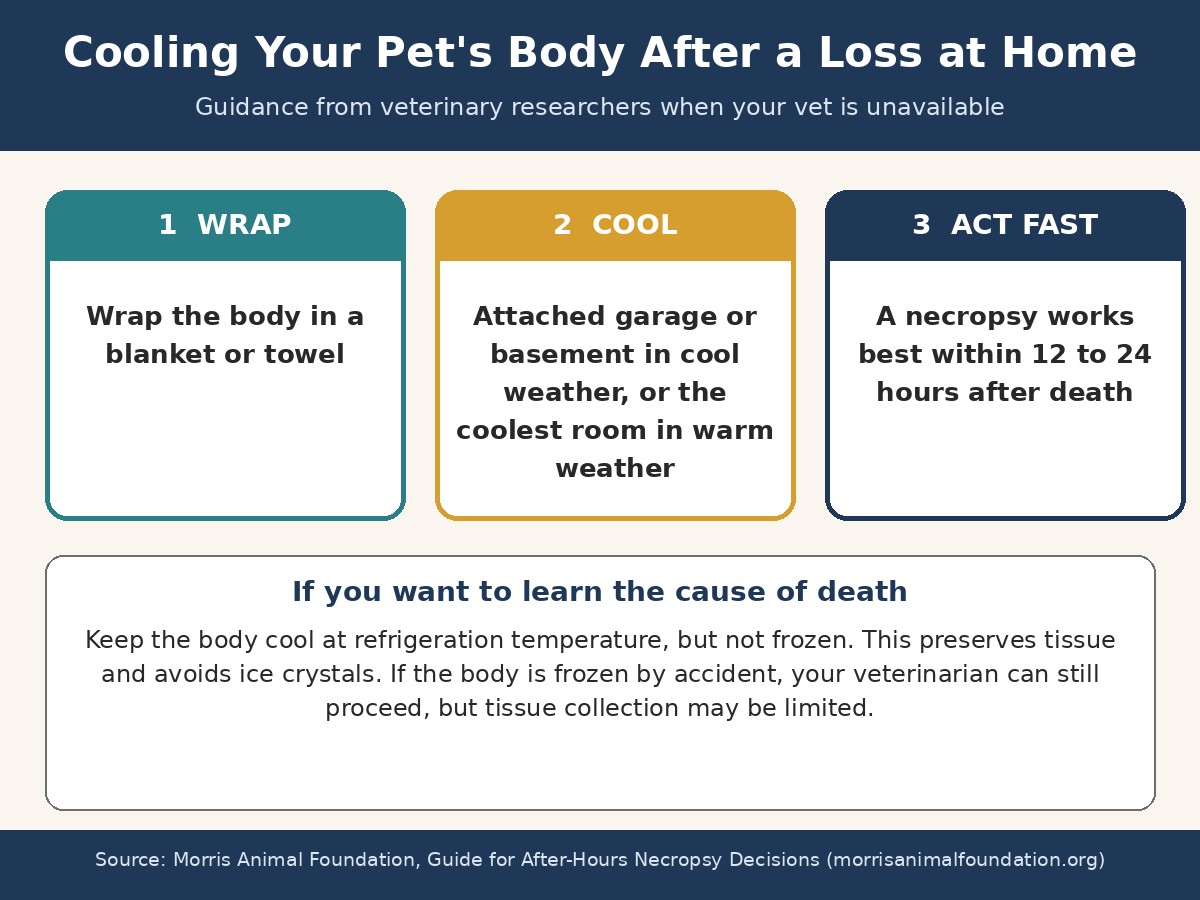
Cooling guidance based on the Morris Animal Foundation, Guide for After-Hours Necropsy Decisions.
If you want to know why your pet died, ask your veterinarian about a necropsy as soon as possible. Veterinary researchers recommend keeping the body at refrigeration temperature, but not frozen, and completing a necropsy within about 12 to 24 hours. A cosmetic necropsy can still allow cremation or burial afterward, so tell your veterinarian your plans ahead of time.
Is It Safe to Put a Dead Pet in the Freezer?
Yes. Freezing is a common, respectful way to hold a pet’s body until you are ready to move forward. Families freeze their pets when cremation or burial cannot happen right away, when the ground is frozen, or when they want to preserve their pet as a lasting memorial. Freezing slows decomposition dramatically, which prevents odor and gives you time to decide.
- Dry off any fluids on your pet’s body.
- Lay your pet in a natural, curled position.
- Wrap your pet in a clean towel.
- Slide your pet into a heavy plastic bag and press out as much air as you can.
- Seal the bag and place it flat in the freezer.
Freezing is best for holding your pet until arrangements are made, so avoid leaving a pet frozen for an extended time without a plan. If you think you might want a lifelike memorial, freeze your pet right away and reach out to Animal Family Pet Preservation before doing anything else.
How Long Can You Keep a Dead Pet at Home?
Without cooling, decomposition begins within hours, so plan to act the same day. A well-cooled body can usually be held for around a day, while a frozen body can wait until you decide. Veterinary offices can often hold remains for a short time, though policies differ, so call and ask.
Timing can also be a legal matter. AVMA reporting from 2002 noted that many states require dead animals to be disposed of within 24 hours, with Illinois as one example. Rules differ by location, so ask your veterinarian or local animal control what applies to you.
Your Aftercare Options at a Glance
Once the first hours have passed, you can compare the main choices side by side.
| Option | What it involves | Keep in mind |
|---|---|---|
| Veterinary clinic aftercare | Your veterinarian holds remains briefly and coordinates cremation or disposal | Call during business hours, since holding times differ by clinic |
| Cremation | A pet crematory cremates your pet, often with pickup arranged from your home | Ask what is returned to you and how each option works before you decide |
| Pet cemetery | Burial in a dedicated memorial ground | Availability, cost, and rules vary by area |
| Home burial | Burial on your own property where local rules allow | Check local laws, call 811 before digging, and plan for depth and water sources |
| Lifelike preservation | Taxidermy or freeze-drying keeps your pet in a natural, lifelike form | Time-sensitive, so freeze your pet promptly and make contact quickly |
Cremation and Cemetery Burial
Many families choose cremation because it is gentle and straightforward, and many providers arrange pickup so you do not have to transport your pet. You can learn more about cremation options for family pets and the questions to ask before choosing. If you prefer burial away from home, your veterinarian will know whether a pet cemetery operates in your area.
Home Burial and Safety
Backyard burial can feel like the simplest choice, but it needs planning. Check local laws first, because some areas do not allow it. Call 811 before digging so buried utilities are marked, keep the grave away from water sources and tree roots, and bury deeply so scavengers cannot reach the remains. The California Department of Fish and Wildlife advises that any chemically euthanized animal be cremated or buried at least three to four feet deep.
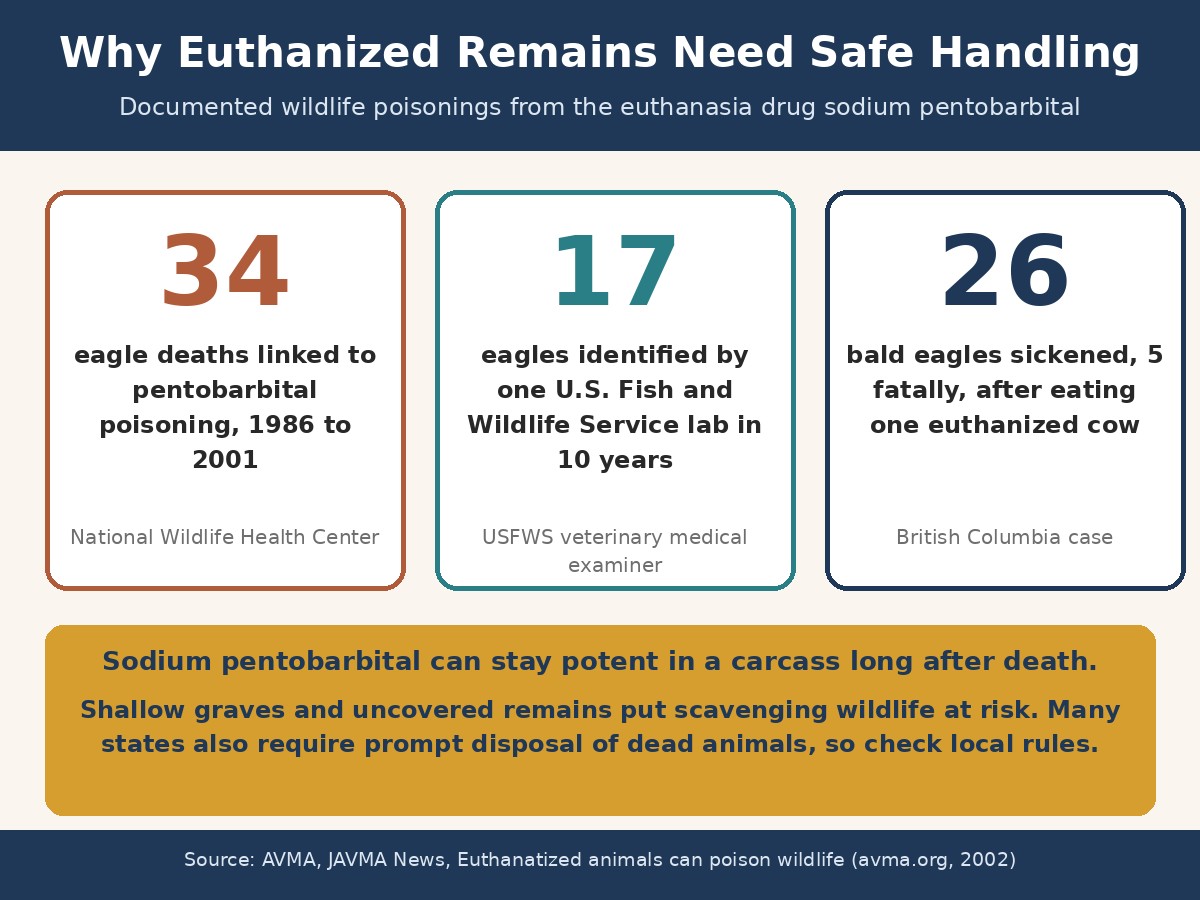
Data from AVMA, JAVMA News: Euthanatized animals can poison wildlife.
The reason is the euthanasia drug itself. Sodium pentobarbital can remain potent in a carcass long after death, and scavengers that reach shallow graves or exposed remains can be poisoned. If your pet was euthanized, cremation or a deep, secure grave protects local wildlife and neighborhood pets.
Preserving Your Pet as a Lasting Memorial
Some families want more than a memory or an urn. They want to keep their pet’s familiar shape, expression, and presence. lifelike memorial preservation for pets is a way to do that, and it begins with the steps you take in the first hours at home.
Different methods suit different pets and families, and a studio can explain how freeze-drying and other preservation methods compare for your pet. Every finished memorial from our studio is backed by a lifetime guarantee, and we work with families nationwide.
Timing matters, so it helps to contact our studio as soon as you can. Details that help us give clear guidance include your pet’s type and approximate size, when they passed, and whether they have been refrigerated or frozen.
When you are ready to plan, you can review what pricing and shipping look like so there are no surprises.
Caring for Yourself and Your Family
Grief after losing a pet is real, and it does not follow a schedule. Some people feel numb at first, while others feel guilt, anger, or a deep sense of emptiness. Talk with people who understand, let children ask questions and say goodbye in their own way, and give other pets time to adjust. Some veterinarians suggest letting a surviving pet sniff the body, which may help them understand what happened.
You do not have to carry this alone. The Cornell University College of Veterinary Medicine offers a pet loss support hotline staffed by trained veterinary students, and you can find support for the days after a loss designed for pet owners facing this kind of loss.
Frequently Asked Questions About a Pet Dying at Home
What should I do first when my pet dies at home?
Take a moment to be with your pet, then confirm the loss and call a friend or family member for support. Lay your pet on a towel, move them somewhere cool, and call your veterinarian for guidance. There is no need to decide on cremation, burial, or preservation right away.
How long can I keep my pet’s body at home?
Decomposition begins soon after death, so plan to act within about a day. A body kept cool or refrigerated holds longer than one left in a warm room, and a frozen body can be held until you decide. Some states also have rules about how quickly a dead animal must be disposed of, so ask your veterinarian or local animal control what applies to you.
Is it safe to put a dead pet in the freezer?
Yes. Freezing is a common way to hold a pet’s body until arrangements are made. Dry the body, wrap it in a towel, seal it in a heavy plastic bag with the air pressed out, and place it in the freezer. If you want to learn the cause of death through a necropsy, refrigerate your pet instead of freezing and call your veterinarian right away.
Can I bury my pet in the backyard?
Only where local rules allow it. Check your local laws, call 811 before digging to locate buried utilities, keep the grave away from water sources, and bury deeply so scavengers cannot reach the remains. If your pet was euthanized, the drug can remain in the body and harm wildlife that scavenges, so cremation or a deep grave is important.
Should I call my vet if my pet dies at home?
Yes. Your veterinarian can confirm the loss if you are unsure, explain your aftercare options, and often arrange cremation or hold remains for a short time. If the clinic is closed, keep your pet cool and call in the morning, or contact an emergency clinic if you need guidance sooner.
What should I do if my pet dies at night or on a weekend?
Wrap your pet in a towel, keep them somewhere cool, and call your veterinarian’s after-hours line or an emergency clinic if you need advice. Nothing has to be decided in the middle of the night, and most arrangements can wait until the next business day.
Can I still preserve my pet after they die at home?
Often, yes, but timing matters. Freeze your pet as soon as possible using the steps above, and reach out to a preservation studio quickly so they can explain the next steps. The sooner your pet is cooled and frozen, the better the condition of the finished memorial.
Talk With Our Team About Preserving Your Pet
If you are facing the loss of your pet right now, we are here to answer questions and explain what to expect. Call or send us a message at any time.
Categorised in: Deceased Pet Options
This post was written by Animal Family Team


Comments are closed here.